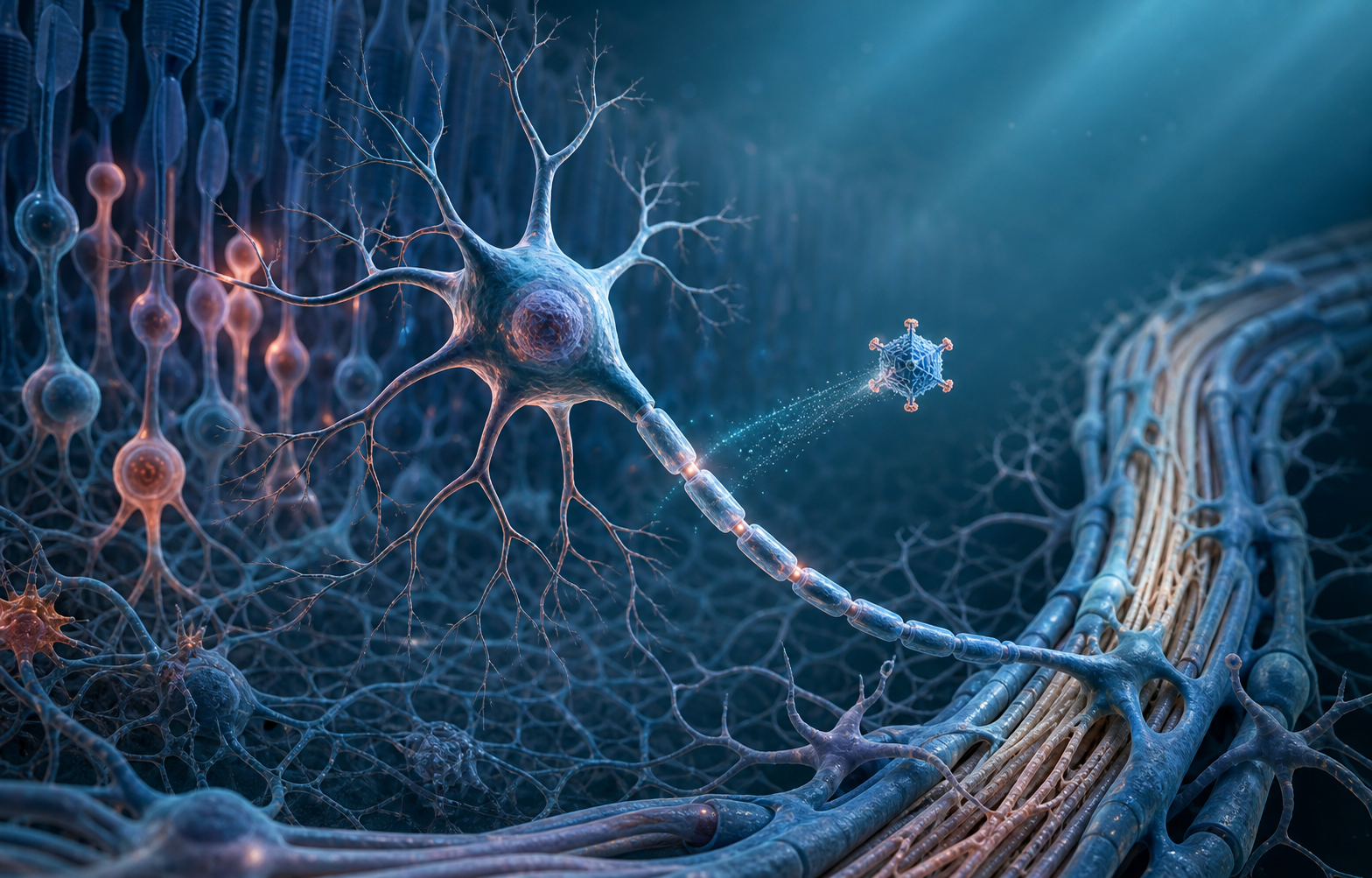
The first person has received an experimental gene therapy designed to restore more youthful behavior in damaged cells.
It is a genuine milestone for longevity science. For years, researchers have reported that cellular reprogramming can reverse some signs of aging in cells and laboratory animals. Now, for the first time, a controlled version of the approach is being tested in a human participant.
But this is not a trial of immortality, whole-body rejuvenation or longer human life.
It is a small Phase 1 study involving people with serious optic-nerve conditions. Its principal purpose is to determine whether the experimental treatment is safe enough to study further.
The evidence at a glance
- Evidence level: Early Research
- Study type: Phase 1, first-in-human clinical trial
- Planned enrollment: Up to 18 participants
- Conditions: Open-angle glaucoma and non-arteritic anterior ischemic optic neuropathy
- Treatment: ER-100 experimental gene therapy
- Primary purpose: Safety and tolerability
- Published human results: None yet
- Available outside the trial: No
What happened
Life Biosciences announced on June 9, 2026, that the first participant had been treated in its Phase 1 trial of ER-100.
The treatment is being investigated in adults with either open-angle glaucoma or non-arteritic anterior ischemic optic neuropathy, commonly shortened to NAION. Both conditions can damage retinal ganglion cells and the optic nerve, potentially causing permanent vision loss.
The trial plans to enroll up to 18 people between the ages of 40 and 85. Twelve participants are expected to have open-angle glaucoma, while six will have NAION.
Participants will be followed closely during the first six months and then annually for as long as five years. That extended monitoring period reflects the experimental nature of the therapy and the need to watch for delayed effects.
What is cellular reprogramming?
Every cell contains essentially the same genetic instruction manual, but different cells use different parts of it.
A retinal cell behaves differently from a liver or skin cell because particular genes are switched on or off. The regulatory system that helps control this activity is known as the epigenome.
As cells age, their epigenetic patterns can become disrupted. Genes may be activated at the wrong time, silenced unnecessarily or expressed less consistently. Some researchers believe that restoring more youthful patterns could help old or damaged cells function better.
Cellular reprogramming attempts to do this by activating proteins capable of resetting aspects of a cell’s identity and behavior.
The most famous version uses four proteins (OCT4, SOX2, KLF4 and c-MYC), known collectively as the Yamanaka factors. Sustained expression of all four can transform an adult cell into something resembling an embryonic stem cell.
That complete reset is not the goal here. A cell that loses its established identity could stop performing its normal function and potentially behave unpredictably.
Instead, ER-100 uses three factors: OCT4, SOX2 and KLF4, collectively abbreviated as OSK. The aim is to produce a limited or partial reset that improves cellular function without erasing the cell’s identity.
How ER-100 works
ER-100 uses a modified adeno-associated virus, or AAV, as a delivery vehicle.
The engineered virus carries genetic instructions for producing the three OSK proteins into cells in the eye. It has been modified so it cannot reproduce like an ordinary infectious virus.
The therapy does not directly rewrite the participant’s existing DNA. Instead, it delivers additional instructions that allow targeted cells to produce the OSK proteins.
Researchers also built an external control into the system. Participants take the antibiotic doxycycline for eight weeks to activate OSK expression. Removing doxycycline is intended to switch that expression off.
This control mechanism is important because the therapy’s effects must be limited carefully. Researchers want enough reprogramming to restore healthier cellular behavior, but not so much that treated cells lose their specialized identity.
Why begin with the eye?
The eye is a practical place to test an experimental gene therapy.
Treatment can be delivered to a confined location, and researchers can examine the retina and optic nerve using established imaging and vision tests. Treating one eye may also limit exposure elsewhere in the body.
There is preclinical evidence supporting this choice. Earlier experiments reported that OSK expression restored more youthful gene-expression and DNA-methylation patterns in mouse retinal cells. Researchers also reported improved axon regeneration and recovery of visual function in mouse models of glaucoma and aging.
A subsequent study followed treated mice for a longer period and reported sustained improvements in visual function without detecting tumors or major structural abnormalities in the retina.
Those findings are encouraging, but mice are not people. Laboratory models cannot establish how the therapy will behave in a larger, longer-lived human body.
What the trial is actually measuring
The study’s primary objective is safety and tolerability.
Researchers will watch for adverse events, abnormal eye examinations, inflammation, changes in laboratory measurements and signs that the treatment travels somewhere it should not.
The first participant at each new dose level will be monitored for 28 days. An independent data-safety monitoring board will review the information before additional participants receive that dose.
Researchers will also collect preliminary measurements related to vision and the health of the optic nerve. These include visual acuity, visual-field testing and measurements of retinal nerve-fibre thickness.
Such measurements could provide an early indication of biological activity. But with no more than 18 participants and no conventional placebo group, the trial will not be able to establish conclusively that ER-100 restores vision or reverses cellular aging.
A positive outcome at this stage would primarily mean that the treatment appeared acceptably safe and showed enough biological promise to justify a larger trial.
What this trial will not prove
Even if ER-100 produces encouraging results, this study will not demonstrate that scientists can reverse whole-body human aging.
- It is testing one experimental therapy.
- It includes only a small number of participants.
- It treats a confined organ.
- It targets two specific medical conditions.
- Safety is its principal objective.
It will not determine whether partial reprogramming extends lifespan, prevents age-related disease generally or makes a person biologically younger throughout the body.
It is also too early to know whether any improvements would last. The OSK proteins are activated temporarily, but researchers do not yet know how durable the resulting cellular changes might be in humans.
Reasons for caution
Partial reprogramming is powerful precisely because it can alter fundamental aspects of cellular behavior. That creates potential as well as risk.
Researchers must determine whether the treatment causes inflammation, immune reactions, unwanted changes in cell identity or other delayed effects. Gene therapies can also produce complications related to their delivery vectors.
The preclinical research should be considered alongside its commercial context. Several researchers associated with the foundational OSK work have disclosed patents, equity positions, consulting relationships or research funding connected to Life Biosciences.
Financial interests do not invalidate scientific findings, but they make independent replication and transparent clinical reporting especially important.
It is also important to distinguish authorization to conduct a clinical trial from approval to sell a treatment. FDA clearance for a Phase 1 study means regulators have allowed carefully monitored human testing to proceed. It does not mean the therapy has been found safe or effective.
The bottom line
The first ER-100 participant represents an important transition for longevity science.
Partial cellular reprogramming has moved from an ambitious laboratory concept into a real human safety trial. Researchers will finally begin learning whether some of the changes observed in animal cells can be produced safely in people.
That deserves attention. It does not justify claims that scientists have reversed human aging.
For now, the most accurate conclusion is more modest: a carefully controlled attempt to restore youthful behavior in damaged human cells has entered clinical testing. Whether it is safe, whether it improves vision and whether the approach can eventually be applied elsewhere in the body remain unanswered questions.
Primary sources
- ClinicalTrials.gov: ER-100 Phase 1 study, NCT07290244
- Life Biosciences: first patient dosed announcement
- Nature Biotechnology: FDA authorization for the trial
- Nature: first participant treated
- Foundational mouse study of OSK-mediated vision restoration
- Longer-term OSK study in a mouse model of glaucoma
This article is for general information and does not provide medical advice. ER-100 is experimental and is not approved for general clinical use.