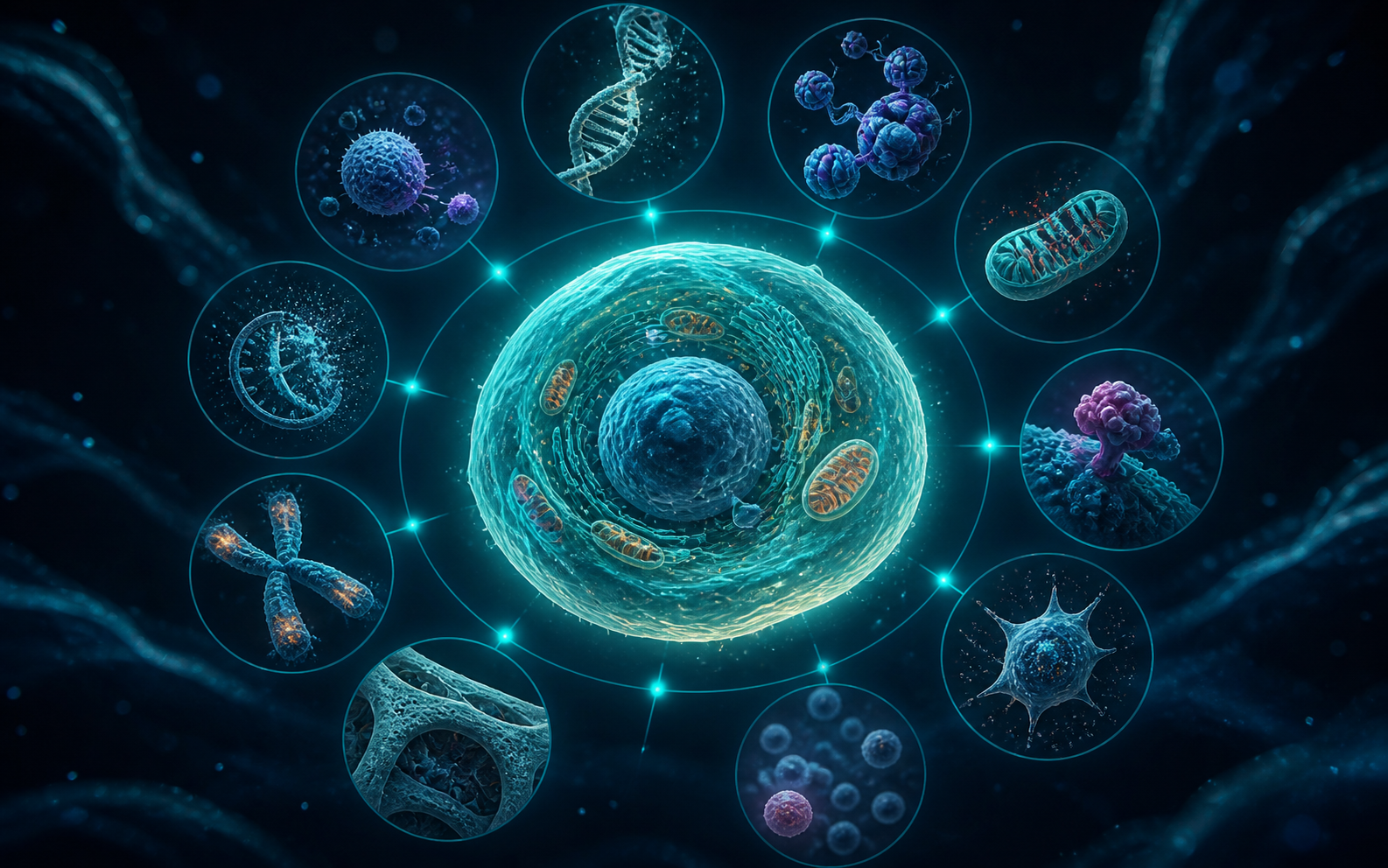
The hallmarks of aging are often presented as a tidy list of defects that science can repair one by one. That makes an appealing diagram. It does not make an accurate theory of human aging.
The framework is better understood as a map of biological pressures that accumulate, interact and sometimes oppose one another. DNA damage can alter gene activity. Failing mitochondria can intensify inflammation. Damaged proteins can overwhelm cellular recycling. Senescent cells can protect against cancer early in life, then impair tissue function when they persist. The same process may be helpful in one setting and harmful in another.
That complexity is precisely why the hallmarks matter. They give scientists a common language for asking whether an intervention changes the machinery associated with aging. They do not prove that altering a laboratory marker will make a person healthier or extend life.
How the framework grew from nine hallmarks to twelve
In 2013, Carlos López-Otín and colleagues proposed nine tentative hallmarks. To qualify, a process should appear during normal aging, experimentally worsening it should accelerate age-related decline, and intervening against it should slow deterioration or improve healthy function. Those standards were deliberately demanding.
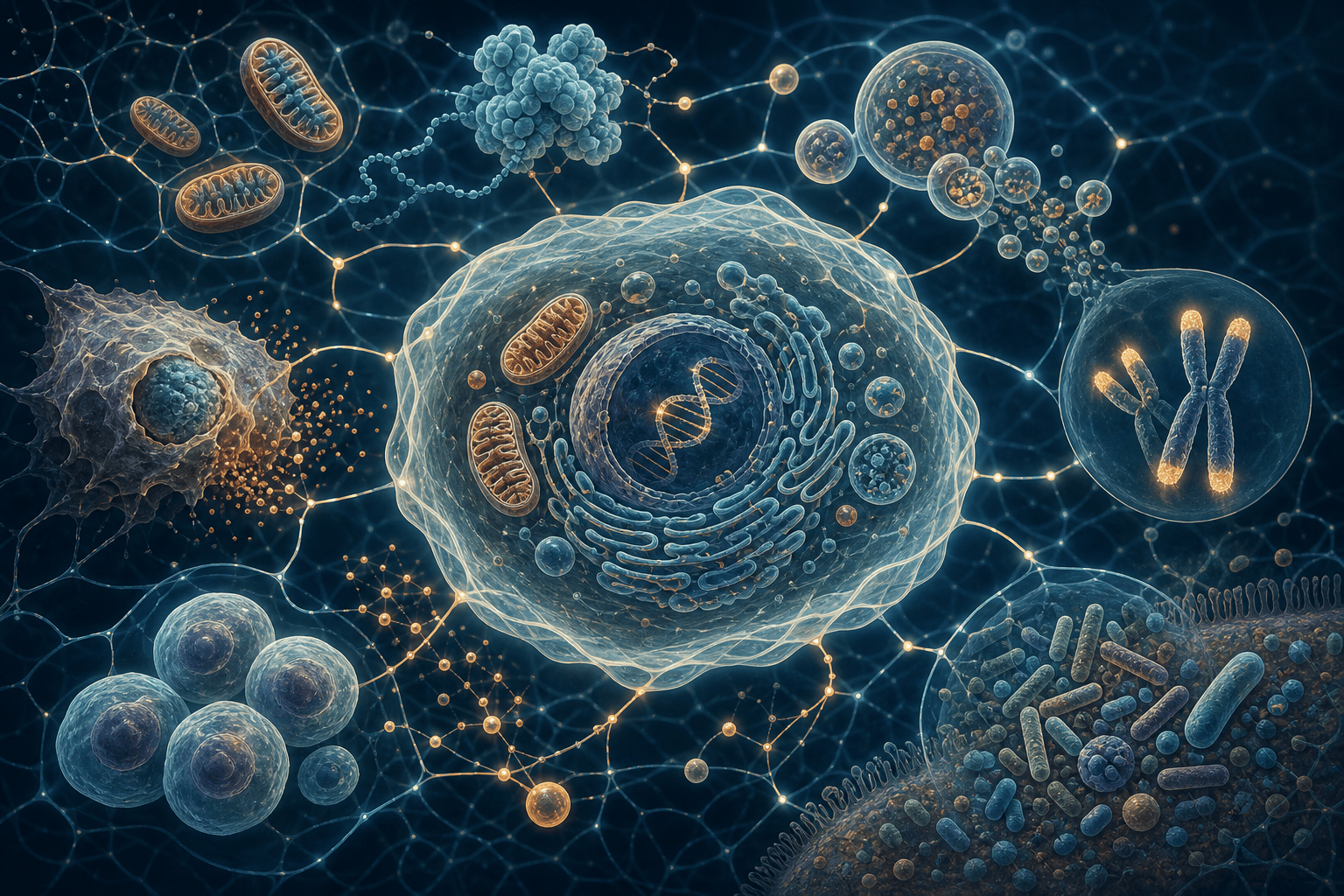
The original nine were genomic instability, telomere attrition, epigenetic alterations, loss of proteostasis, deregulated nutrient sensing, mitochondrial dysfunction, cellular senescence, stem-cell exhaustion and altered intercellular communication.
A 2023 update added disabled macroautophagy, chronic inflammation and dysbiosis. The expansion reflected a decade of new evidence, but it also revealed something important: this is an evolving research framework, not a finished periodic table of aging.
The damage and information hallmarks
Genomic instability
DNA is continually exposed to replication errors, reactive molecules, radiation and environmental chemicals. Cells repair much of this damage, but repair is imperfect. Mutations and structural changes can accumulate in both nuclear and mitochondrial DNA. Some changes are harmless, some disable cells, and some contribute to cancer.
The therapeutic problem is not simply to increase DNA repair. Repair systems must recognize the right lesions without allowing severely damaged cells to survive and proliferate. A treatment that protects tissue while weakening cancer surveillance would be a poor longevity intervention.
Telomere attrition
Telomeres protect chromosome ends. They generally shorten as many human cells divide, eventually helping trigger growth arrest when chromosomes become dangerously exposed. Very short telomeres can impair tissue renewal, but longer is not automatically better. Cancer cells commonly reactivate telomere-maintenance machinery so they can keep dividing.
Human genetic evidence captures the tradeoff. Genetically longer leukocyte telomeres have been associated with lower risk for some degenerative conditions and higher risk for numerous cancers. Telomere length is therefore neither a universal biological-age score nor a simple target to maximize.
Epigenetic alterations
Cells with the same DNA sequence perform different jobs because chemical marks and chromatin structure influence which genes are accessible. These regulatory patterns change with age. Epigenetic clocks can estimate aspects of biological aging from methylation patterns, but a clock is a measurement model, not necessarily the mechanism it measures.
Partial cellular reprogramming aims to restore more youthful gene regulation without erasing cell identity. Results in cells and animals have made this one of the field’s most closely watched approaches. Human trials are only beginning, and the central safety questions involve delivery, loss of identity and uncontrolled growth.
Loss of proteostasis
Proteins must be folded, maintained and removed with extraordinary precision. Age can weaken the quality-control systems that perform those tasks, permitting damaged or misfolded proteins to accumulate. This is particularly relevant to neurodegenerative disease, where abnormal protein assemblies are prominent.
Yet removing one visible protein deposit does not always restore function. The deposit may be downstream of earlier damage, or one form of a protein may be less toxic than another. Successful treatment has to improve the system, not merely make a biomarker look cleaner.
Disabled macroautophagy
Macroautophagy packages worn cellular material for breakdown and reuse. It is both a waste-removal system and a survival program during stress. Autophagy declines in many aging models, and restoring it can improve lifespan or function in several organisms.
Translation remains difficult. A small randomized pilot suggested that spermidine might support memory, but a larger 12-month randomized trial in 100 older adults found no significant improvement in its primary memory outcome or biomarkers. That progression from promising pilot to negative primary result is exactly why early evidence cannot be treated as a verdict.
The response hallmarks
Deregulated nutrient sensing
Insulin and IGF-1 signaling, mTOR, AMPK and sirtuins help cells respond to energy and nutrients. In laboratory animals, interventions affecting these pathways can produce striking lifespan effects. The result depends on species, dose, timing, sex, diet and genetics.
The CALERIE randomized trial provides a rare human foothold. Participants assigned to two years of caloric restriction achieved an average reduction closer to 12 percent than the 25 percent target. Analyses found improvements in several cardiometabolic measures and modest changes in some biological-aging estimates. The study did not demonstrate longer human life, and caloric restriction can carry risks if it produces malnutrition, excessive weight loss or loss of lean tissue.
Mitochondrial dysfunction
Mitochondria generate energy, coordinate stress responses and help determine whether damaged cells survive. With age, mitochondrial DNA mutations, altered dynamics and inefficient quality control can disrupt those functions. The older idea that aging is simply the result of free-radical damage has given way to a more nuanced view in which mitochondrial signals can be damaging or adaptive.
This matters when evaluating antioxidant claims. Broadly suppressing reactive molecules may also suppress useful exercise adaptation or cellular signaling. A plausible mitochondrial mechanism does not make every antioxidant a geroprotector.
Cellular senescence
Senescent cells stop dividing and can release inflammatory and tissue-remodeling signals. The response helps suppress damaged-cell proliferation and supports processes such as wound healing. Trouble arises when senescent cells persist and their secretions disrupt neighboring tissue.
Senolytic drugs are designed to remove selected senescent cells. In a small open-label pilot involving nine people with diabetic kidney disease, a short course of dasatinib plus quercetin reduced several senescence markers in sampled tissues. This established biological activity, not clinical benefit. The study was tiny, lacked a placebo group and was not designed to show that participants became healthier or aged more slowly.
When aging becomes a tissue-wide problem

Stem-cell exhaustion
Tissues depend on stem and progenitor cells to replace lost or damaged cells. Their number, fitness or supportive environment can decline with age. Simply forcing stem cells to divide harder is not an obvious solution. Excessive proliferation can deplete reserves, distort tissue organization or increase cancer risk.
Altered intercellular communication
Cells coordinate through hormones, neurotransmitters, immune signals and direct contact. Aging changes that communication across organs. A signal originating in fat, muscle, brain or immune tissue can influence distant systems, which helps explain why a local intervention may have effects elsewhere.
Chronic inflammation
Low-grade inflammation tends to rise with age and is associated with cardiovascular disease, frailty, diabetes and neurodegeneration. Sources can include senescent cells, damaged molecules, infections, visceral fat and impaired barrier tissues. Inflammation is not merely toxic noise. It is essential for defense and repair, so the aim cannot be indiscriminate suppression.
Dysbiosis
The communities of microbes living in the gut and other body sites change with age, medication, diet, geography and disease. Microbial products can influence immunity and metabolism. Association is abundant, but causality in humans is harder to establish because illness itself changes diet, medication use and the microbiome.
There is no single youthful microbiome that can simply be bottled. Results from animal transfers are scientifically important, but they do not prove that a commercial probiotic will reproduce the effect in people.
Why the hallmarks cannot be treated independently
Consider a simplified chain. DNA damage can push a cell into senescence. The senescent cell can release inflammatory signals. Inflammation can alter stem-cell niches and mitochondrial function. Damaged mitochondria can generate new stress signals, while impaired autophagy allows defective components to persist. Dysbiosis can add microbial products that further stimulate immunity.
The arrows also run in reverse and sideways. That creates two challenges. First, a change in one hallmark may be a downstream consequence rather than the main driver. Second, improving one process may impose a cost elsewhere. More cell survival can preserve tissue but retain damaged cells. More proliferation can aid repair but increase malignant potential. Less inflammation can reduce chronic injury but weaken infection control.
This is why claims that a product “targets all twelve hallmarks” should inspire skepticism. Affecting a pathway in a dish is not equivalent to restoring coordinated function in a human body.
What counts as evidence that aging has been slowed?
No single measurement settles the question. Lifespan studies in humans take decades. Clinical trials therefore rely on disease outcomes, physical and cognitive function, safety data and proposed biomarkers of biological aging.
A convincing result should survive several tests:
- The evidence is human. Cell and animal studies establish mechanisms and justify trials, but cannot establish human benefit.
- The comparison is controlled. Randomization and an appropriate control group reduce the chance that selection, expectation or unrelated lifestyle changes explain the result.
- The outcome matters. Better strength, mobility, cognition, disease risk or survival carries more weight than movement in one molecular marker.
- Effects agree across measures. A biomarker result is stronger when it aligns with physiology and clinical function.
- Safety is measured long enough. Cancer, immune disruption and loss of tissue resilience may take time to emerge.
- The result is reproduced. A single small trial, especially an open-label study, is a starting point.
The most realistic path to human therapies
The first useful geroscience treatments may not arrive with an indication for “aging.” They are more likely to target a defined disease or loss of function in a selected population. An intervention might improve immune response in older adults, preserve vision, reduce fibrosis, maintain muscle after illness or delay several age-related conditions in people at elevated risk.
This approach provides measurable endpoints and a clearer balance of benefits and harms. It also respects a fact sometimes obscured by longevity marketing: older adults are not biologically interchangeable. A therapy appropriate for a person with frailty may be unnecessary or harmful for a healthy middle-aged person.
The hallmarks remain valuable because they help researchers connect those disease-specific trials to shared biology. If several interventions improve function while consistently changing related pathways, confidence in the underlying mechanism grows.
The Lifespan Brief assessment
The hallmarks of aging are the field’s most useful organizing map. They explain why aging research extends beyond any single molecule, organ or disease. They also reveal why translation is hard: the processes overlap, perform beneficial as well as harmful roles, and are supported by very different levels of evidence.
The strongest conclusion today is not that twelve targets have been identified and await treatment. It is that researchers now have a disciplined way to test whether an intervention changes aging biology, whether that change improves human function, and whether the benefit is worth the risk.
That is less dramatic than a cure for aging. It is also how a scientific framework becomes medicine.
Primary sources and further reading
- Cell: The Hallmarks of Aging, 2013
- Cell: Hallmarks of Aging: An Expanding Universe, 2023
- Systematic review of genetically determined telomere length and health outcomes
- Randomized trial of spermidine supplementation and cognition
- CALERIE randomized trial analysis of biological-aging measures
- CALERIE randomized trial analysis of cardiometabolic risk factors
- Pilot human trial of dasatinib plus quercetin and senescence markers