A direct test of a cellular energy sensor produced longer lives in three model organisms. The mouse findings were molecular, and human lifespan benefits remain unproven.
Many longevity ideas start with a familiar observation: cells respond differently when energy is scarce. A new study asks a more precise question. Can directly switching on one of the sensors involved in that response influence lifespan?
Researchers used a compound called 991 to activate AMPK, an enzyme that helps cells manage their energy supply. In research published in Aging Cell, treated fission yeast, nematode worms and fruit flies lived longer. The result gives scientists a clearer reason to investigate AMPK itself as a longevity target, while leaving major questions about mammals and people unanswered.
What AMPK does
AMPK is short for AMP-activated protein kinase. Think of it as a cellular energy sensor. When available energy falls, including during exercise or fasting, it helps adjust metabolism: reducing some energy-consuming activities and encouraging processes that generate fuel. It is one part of those responses, not a complete explanation of their effects.
That distinction matters. Activating a single enzyme does not automatically reproduce everything exercise or fasting does in the body.
What the study found
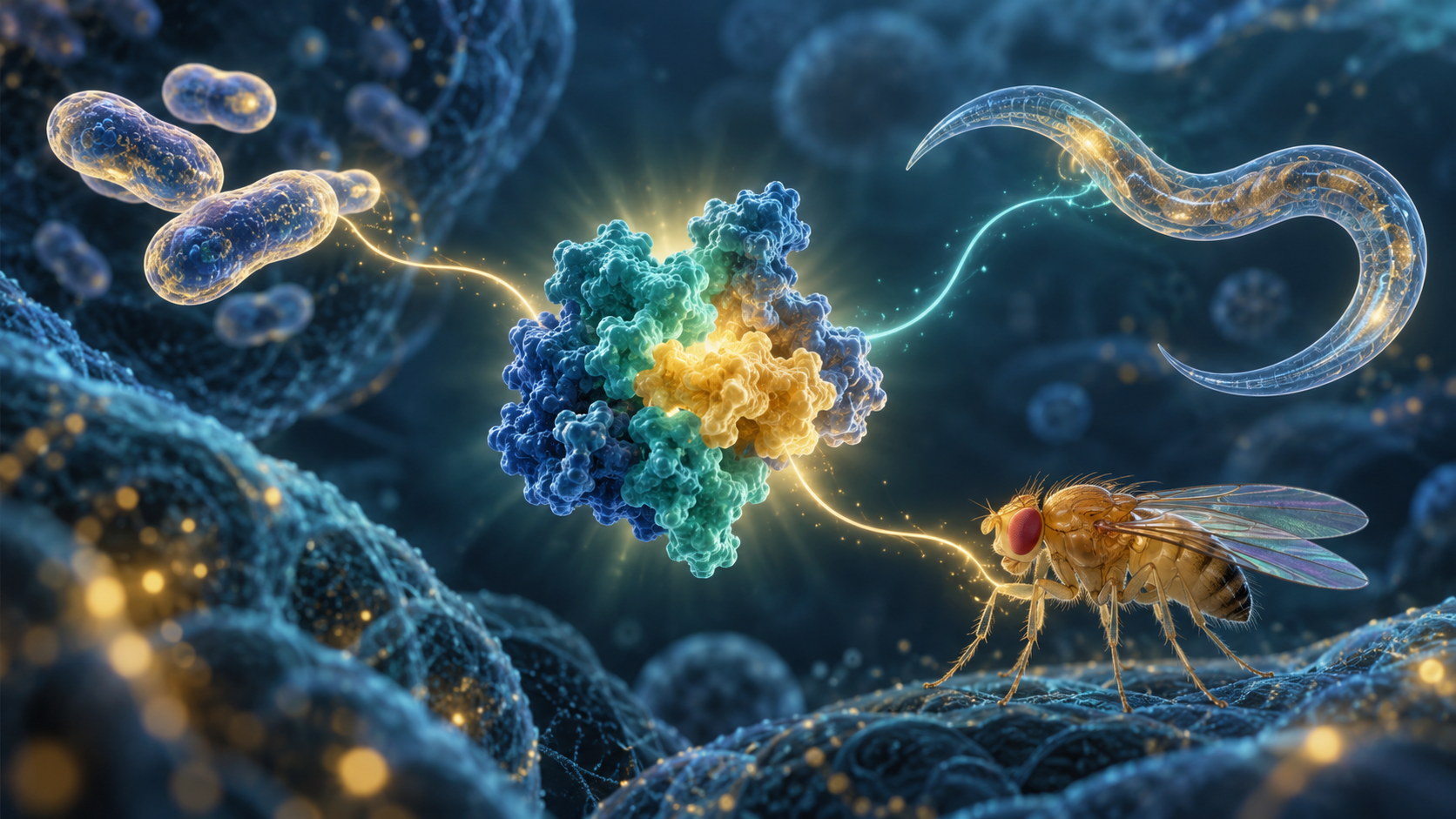
The team tested direct AMPK activation in Schizosaccharomyces pombe, a fission yeast; Caenorhabditis elegans, a small roundworm; and Drosophila melanogaster, the fruit fly. Lifespan increased in all three. These are laboratory model organisms, not human participants.
The mouse experiments measured a different outcome. Treatment produced longevity-associated changes in the proteome, the collection of proteins being measured. Those patterns are a clue for further work. The study did not demonstrate that treated mice lived longer.
Why researchers care
Some drugs influence AMPK indirectly while also affecting other processes. That makes it difficult to work out which mechanism accounts for a result. The authors used 991 to test AMPK more directly. Finding lifespan effects across three distantly related organisms strengthens the case for investigating a shared biological pathway.
For readers, the useful advance is the sharper question. Instead of treating every metabolic intervention as interchangeable, researchers can ask whether targeting this particular sensor produces benefits, in which tissues, and under what conditions.
Limitations and what this does not mean
This is preclinical research. Longer survival in yeast, worms and flies does not establish a safe or effective way to extend human lifespan. Nor does a protein profile establish longer life or better health in a mouse. Those claims require direct measurements.
The next tests need to address durability, dose, safety and health outcomes in mammals. A treatment could change a molecular marker without delivering a meaningful benefit. Any eventual human application would also need appropriate clinical trials. This paper supplies no basis for readers to use compound 991 or assume that an AMPK supplement will reproduce the findings.
The takeaway
Direct AMPK activation is a credible research lead because it affected lifespan in three model organisms. The evidence supports further experiments. It does not yet support a human longevity treatment.
Sources: Original study in Aging Cell; Imperial College accepted manuscript record; UKRI research summary.