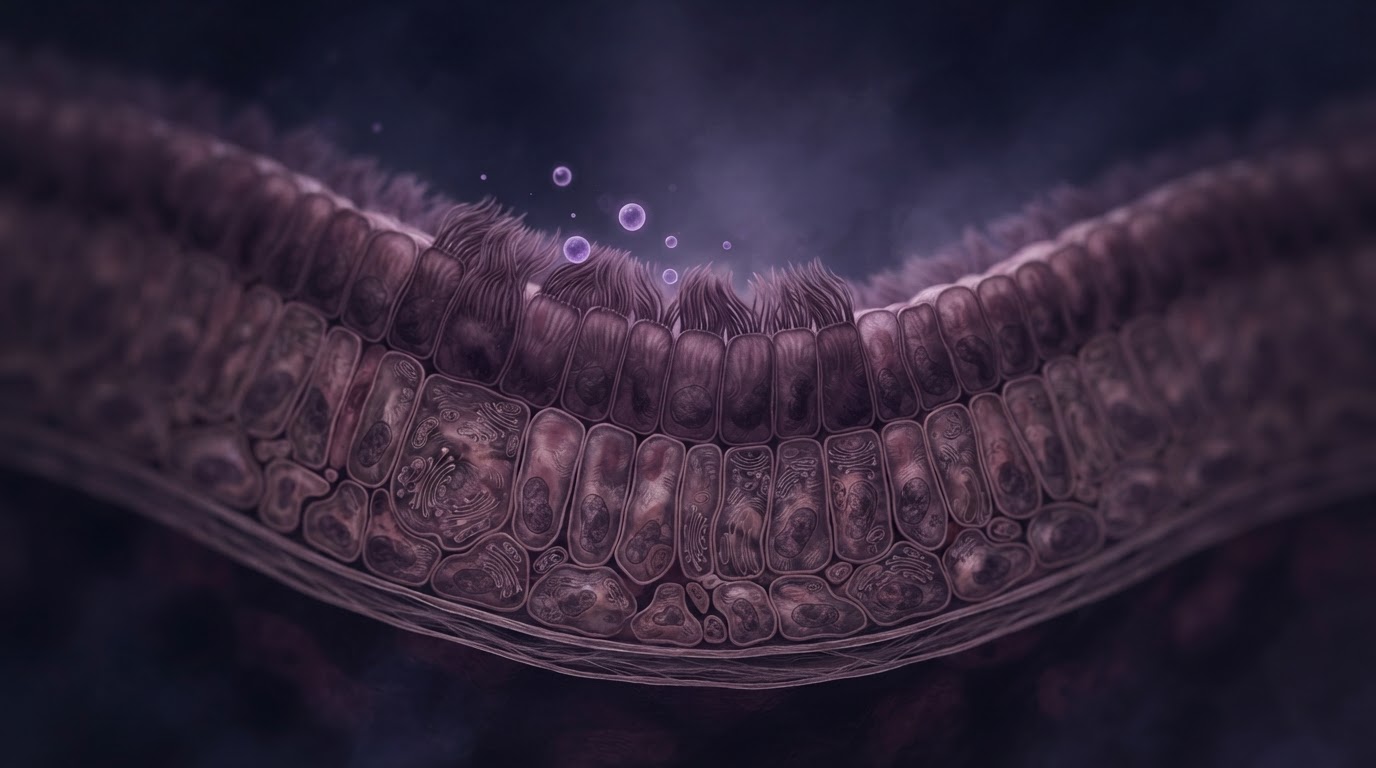
Featured image: AI-generated editorial illustration.
Tiny packages released by reprogrammed stem cells helped airway cells from people with idiopathic pulmonary fibrosis regain some features associated with tissue repair. The changes appeared in cell cultures and in thin slices of scarred human lung maintained in the lab. Chenwen Huang and colleagues also found effects on airway repair cells in mouse models. The study appeared in Aging Cell on November 24.
What the researchers tested
Idiopathic pulmonary fibrosis is a disease in which scarring makes the lungs stiffer. The study focused on airway basal stem cells, which help maintain and repair the lining of the airways. In samples from people with the disease, many of these cells showed signs of senescence, a state in which cells stop dividing and their behaviour changes.
The team exposed the airway cells to exosomes, a type of extracellular vesicle that carries proteins and other material between cells. The vesicles came from induced pluripotent stem cells, which are mature cells reprogrammed to a state from which they can develop into many cell types. Vesicles from another source, mesenchymal stromal cells, produced much smaller effects in the authors’ comparisons.
What changed in the lab
Several markers associated with senescence, including p16 and p21, declined after exposure to the reprogrammed-cell vesicles. The airway cells showed greater capacity to multiply and migrate in culture. In lung slices, where cells remained embedded in surrounding tissue, the team also found changes in markers of scarring. Several of the cell experiments used samples from three to five independent donors.
The vesicles contained relatively high levels of YBX1, a protein involved in regulating gene activity. Increasing YBX1 in airway cells reproduced part of the response. Interfering with a related gene-regulating complex, NF-Y, weakened part of the effect. Those experiments point to a possible mechanism, with room for other vesicle components to contribute.
What remains to be tested in people
In mouse models of ageing and acute airway injury, the researchers saw changes consistent with a more active pool of basal cells. The human evidence came from cells and tissue studied outside the body. The experiments leave open whether the vesicles can safely reach the appropriate cells in a living person, improve breathing or change the course of pulmonary fibrosis.
Our earlier coverage of experimental work on lung scarring followed a different approach in mice. This study adds evidence about how repair cells from human lungs can respond under laboratory conditions.
Read the open-access study in Aging Cell.
The Takeaway
Stem cell-derived vesicles changed several signs of senescence and repair in patient-derived airway cells, with supporting evidence from mice. Whether the approach can restore lung function in living patients remains untested.