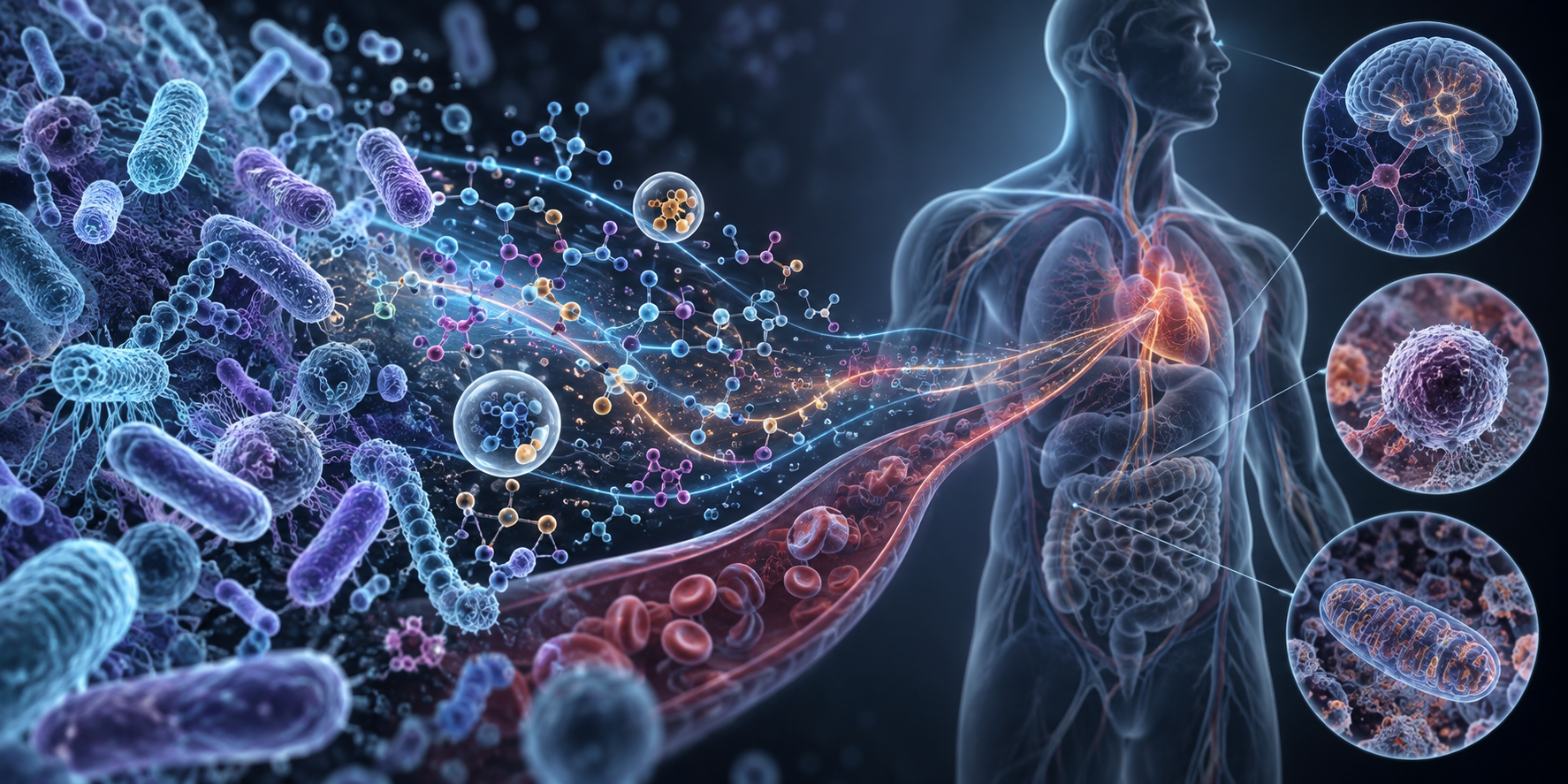
A common bacterium found in the mouth has emerged as a possible link between the oral microbiome and biological aging. In a new Nature Aging study, researchers associated higher levels of Neisseria flavescens with slower aging-related patterns in human data, then tested two isolated strains in worms and mice. The experimental results are intriguing, but they do not show that taking the bacterium slows aging in people.
The finding at a glance
- Human evidence: association and computational prioritization across oral microbiome, metabolomic and physiological data.
- Worm evidence: live N. flavescens extended lifespan and improved several health-related measures in Caenorhabditis elegans.
- Mouse evidence: heat-killed bacteria shifted parts of the serum metabolome, liver transcriptome and gut microbiome of aged mice toward patterns seen in younger animals.
- What is missing: a human intervention trial testing whether the bacterium, or molecules derived from it, improve health or slow aging.
- Commercial context: two study authors report a pending patent covering N. flavescens and its applications.
What researchers found
The team, led by Jing-Dong J. Han and colleagues in China, combined several forms of human aging data. These included oral microbial DNA, plasma metabolites, physiological measurements and imaging-based estimates of biological age. Their analysis identified N. flavescens, an oral commensal that commonly lives in the mouth, as a prominent feature associated with a smaller gap between predicted biological age and chronological age.
An association of this kind can nominate a candidate, but it cannot determine direction. The bacterium might influence host biology, healthier people might provide an environment in which it thrives, or diet, smoking, oral hygiene and other factors might affect both. The paper examined several of these variables, and a one-year analysis included 132 participants, but observational adjustments cannot reproduce a randomized intervention.
How they identified the bacterium
The researchers built a generative artificial-intelligence framework called AURORA. It aligned multiple datasets, created aging clocks and simulated how changing a microbial feature might alter predicted age gaps and other physiological signals. In these computer-based perturbations, increasing N. flavescens abundance was linked to more favorable predicted patterns, including changes in metabolites and gut microbes.
This was a prioritization method, not a human experiment. A simulated increase in a bacterium does not show that the same change can be produced safely in a person, or that it would cause the predicted effect. The value of the analysis was that it gave the researchers a specific organism to take into laboratory testing.
They isolated two strains, called a11 and e5, and characterized metabolites in their culture supernatants. The strains produced vitamins and other metabolites the researchers considered potentially beneficial. Those chemical findings offered possible mechanisms to investigate, but they did not establish which molecule, if any, explains the animal results.
What happened in worms
Live a11 and e5 bacteria extended survival in C. elegans across reported experiments. The worms also showed improvements in measures used as proxies for healthspan, including movement and intestinal-barrier integrity. Independent experiments reproduced the survival effect, while heat-killed bacteria improved some measures without reproducing every result seen with live organisms.
Worms are useful for rapidly testing conserved stress, metabolism and aging pathways. They are also biologically distant from humans. In this experiment, the bacteria were part of the worms’ food environment, and the way microbes interact with a worm intestine does not directly model a human oral microbiome. Longer worm survival is evidence of an experimental effect in that organism, not evidence of human lifespan extension.
What happened in mice
The mouse experiment used heat-killed N. flavescens, an important distinction from the live bacteria used in the main worm lifespan tests. Aged mice received one of the two strains for 10 weeks. The study compared molecular profiles from these animals with those of untreated old mice and young controls.
Across serum metabolites, liver gene activity and gut microbial composition, some treatment-associated changes pointed in the opposite direction from age-associated changes. In plain language, portions of the measured molecular profile moved closer to the patterns seen in younger animals. The experiment used small groups, generally six mice per group, with one analysis containing five animals in a treatment group.
These were molecular and microbial endpoints. The mouse study did not report that the animals lived longer, and a younger-looking profile is not equivalent to restored organ function or better survival. Heat-killed organisms can still contain cell-wall components and metabolites that affect immunity or metabolism, so the result also does not show that the bacterium needs to colonize the body.
What the human data actually show
The human portion links N. flavescens abundance with composite aging-related patterns and uses a computational model to rank possible interventions. No participant was assigned to receive the bacterium. The study did not test a mouth rinse, food, supplement or drug derived from it, and it did not measure whether adding the organism changes disease risk, physical function or lifespan.
The strongest causal evidence therefore comes from worms and mice, not people. Even there, the interventions differed: live bacteria in worms and heat-killed bacteria in aged mice. Those designs answer useful mechanistic questions, but they do not yet define a product or treatment that could be carried into a human trial.
What this does not prove
- It does not show that N. flavescens slows aging or extends lifespan in humans.
- It does not establish that people with more of the bacterium are healthier because of the bacterium.
- It does not identify a safe human dose, route of administration or manufacturing standard.
- It does not justify calling the organism an anti-aging probiotic.
- It does not provide a reason to seek out, culture or ingest N. flavescens.
Members of the genus Neisseria include harmless commensals as well as pathogens. Even a normally benign oral organism can behave differently outside its usual ecological setting or in a person with altered immunity. Safety, strain identity and delivery would all need direct study.
What researchers would need to demonstrate next
Independent laboratories first need to reproduce the animal findings and determine whether the active signal comes from living bacteria, a heat-stable cellular component, one or more metabolites, or a change in the existing microbiome. Experiments should connect molecular shifts with functional outcomes, establish dose response and duration, and look carefully for infection, inflammation or ecological disruption.
If that work supports continued development, an early human study would begin with safety and biological activity, not lifespan. A credible efficacy program would require randomized controls and predefined clinical or functional outcomes. Changes in aging clocks or omics profiles could help explain an effect, but would not by themselves prove that people remain healthier or live longer.
Bottom line
This study is scientifically interesting because it moves from a human association, through an AI-based hypothesis, into experiments in two animal models. Live N. flavescens improved survival and several health-related measures in worms, while heat-killed bacteria shifted selected molecular profiles in old mice toward younger patterns. There is still no evidence that taking the bacterium slows human aging, and no basis for self-experimentation.
Sources and reporting note
This article is based on the peer-reviewed Chen, Ren, Zhou and colleagues paper in Nature Aging, including its source-data descriptions and extended figures. The authors disclose that Jing-Dong J. Han and Ya Ren have a pending patent titled “Neisseria flavescens and its applications.” Terms such as “younger” in this article describe similarity among measured molecular profiles, not demonstrated rejuvenation of an animal or person.